Three of the five vendor explainers I opened while researching this piece — Klaviyo's, Aprimo's, and AI Digital's — now return 404. That tells you something about the category: personalization advice ages faster than the pages describing it.
AI hyper-personalized marketing for a startup is not a platform you buy. It is one narrow, instrumented surface where a model decides the next message in real time. Pick the surface with the shortest feedback loop — a signup flow, an onboarding email, a reply thread — prove lift there, then expand. Until that works, everything else is a distraction.
Key takeaways
- Hyper-personalization is not more segments. It is per-person decisions made at the moment of contact, using context you already have.
- The stack has four layers: identity, prediction, content, delivery. Startups usually need prediction and content first, not a new customer data platform.
- Real-time wins on high-intent surfaces. Batch still wins on long-cycle nurture.
- Measure incrementality with a holdout, not click-through. If you cannot run a holdout, you cannot claim personalization worked.
- Compliance is an input to personalization, not a cleanup task afterward.
What Is Hyper-Personalization in 2026 and Why Does It Matter for Startups?
Hyper-personalization means generating the next message, offer, or page for one person from live context — what they did this session, what plan they are on, what they replied to last week — rather than from a segment they were sorted into last month. For startups it matters because your edge is not data volume. It is speed of action on thin data.
A seed-stage company has maybe a few thousand users and a few hundred paying ones. That is not enough to train anything interesting. It is plenty to notice that trial users who invite a teammate convert differently from those who do not, and to change the message for each group by tomorrow.
Where it actually pays off for SaaS startups:
| Surface | What typically improves | How fast you can tell |
|---|---|---|
| Trial onboarding | Activation, first-value moment | Days |
| Pricing page | Trial-to-paid conversion | 1–2 weeks |
| Lifecycle email | Reply rate, upgrade rate | 2–4 weeks |
| Support/community replies | Retention, expansion | 4–8 weeks |
| Paid landing pages | CAC efficiency | 2–3 weeks |
Start at the top. The shorter the feedback loop, the faster you learn whether the model is helping or just adding latency.
Beyond Basic Personalization: How Is AI Changing the Game?
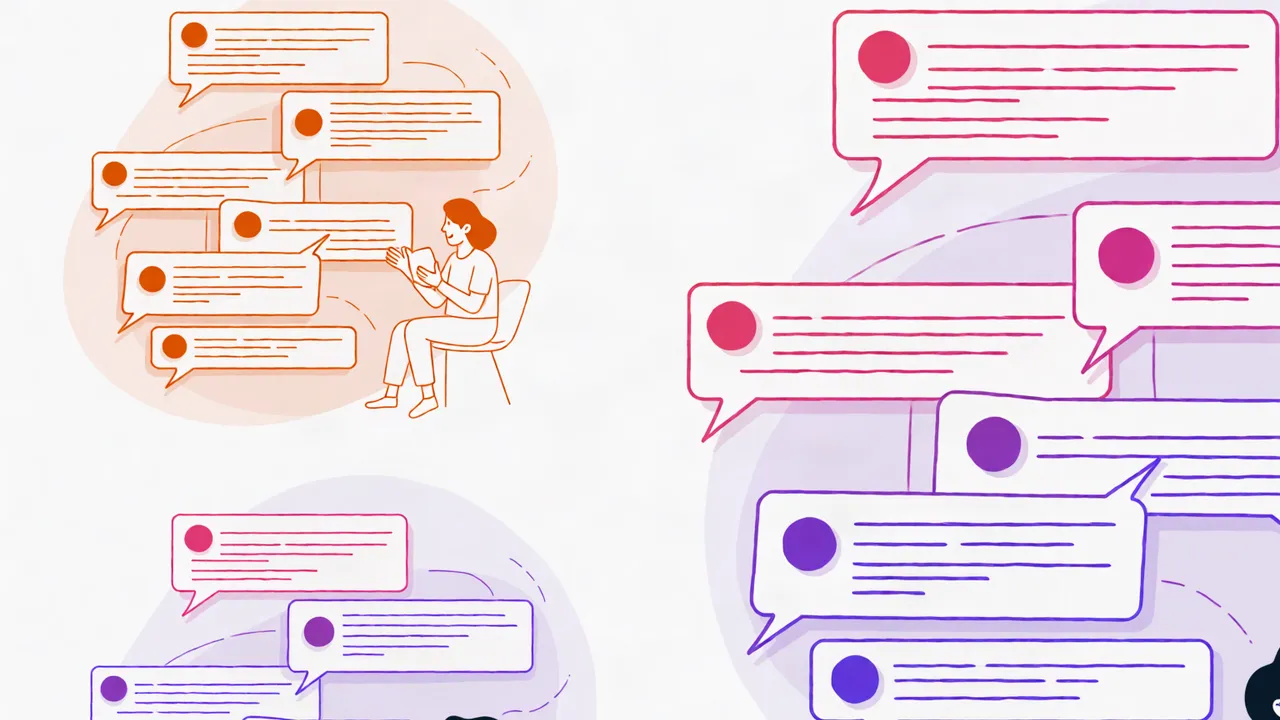
Basic personalization fills in a first name and swaps a hero image based on industry. AI-driven personalization decides what the offer should be, in what order the arguments appear, and whether to send anything at all. The shift is from rules a human wrote to decisions a model makes and a human audits.
The practical difference:
| Basic personalization | Hyper-personalization | |
|---|---|---|
| Input | Static attributes | Behaviour + context + history |
| Logic | If/then rules | Model-scored next best action |
| Timing | Batch (nightly) | At the moment of contact |
| Content | Templates with variables | Generated variants, brand-constrained |
| Failure mode | Irrelevant | Wrong and confident |
| Audit burden | Low | Real — you need review |
That last row is the one founders underestimate. When a model writes the message, someone has to own what it says. If you are generating copy at volume, keeping AI output in your brand voice is the difference between individualization and noise.
What AI Technologies Power Hyper-Personalization for Startups?
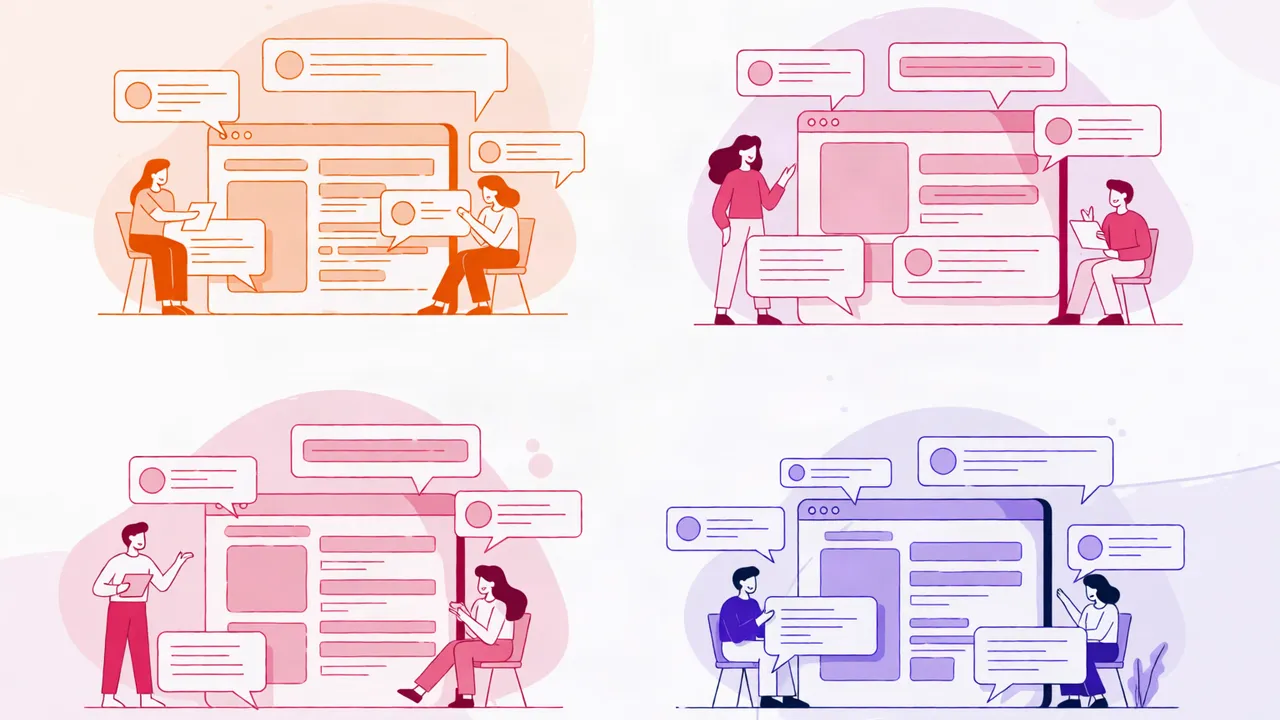
Four layers do the work: identity (who is this), prediction (what should happen next), content (what do we say), and delivery (where and when). Most startups already have identity and delivery. The leverage is in the middle two, and you can rent all four.
AI Customer Data Platforms: Do You Actually Need One?
A customer data platform unifies events, traits, and identities into one profile you can query. Useful. Rarely the first purchase for a startup. If your product analytics tool already stitches anonymous sessions to accounts, you have an 80% CDP for your current stage. Buy the real thing when you have three or more sources of customer data that disagree with each other — not before.
AI Predictive Analytics Marketing: Scoring the Next Action
This is where most of the value sits. A model scores each account or user on likelihood to convert, churn, or expand, and that score decides the message. You do not need a data team. You need one well-defined outcome, a few dozen features you can compute from events you already log, and a willingness to check the score against reality monthly. AWS's executive insights on using data to deliver personalized marketing at scale is a reasonable orientation if you want the enterprise-shaped version of this before you scope down.
AI Content Personalization and Individualized Experiences
Content personalization means assembling the message from modular pieces — proof point, objection handler, call to action — chosen per person, rather than picking from ten pre-written emails. The constraint is brand. Generate variants, but keep a human-approved library of claims, and never let the model invent a customer story or a number. Yes&'s writeup on how AI enables hyper-personalized marketing at scale covers the agency-side view of the same problem.
AI Real-Time Personalization vs. Batch: Which Should You Build First?
Build batch first if your sales cycle is longer than a week; build real-time first if your conversion decision happens inside a session. Real-time personalization means the decision is made in the request path — under a second — using the current session's context. Batch means you score everyone nightly and act on it the next day.
Real-time is harder than it sounds: it needs low-latency feature lookups, a fallback when the model times out, and logging good enough to debug why someone saw the wrong thing. For a pricing page or a signup flow, that complexity is worth it. For a 30-day nurture sequence, it is theatre.
How Do AI-Driven Customer Journeys Differ From Traditional Lifecycle Marketing?
Traditional lifecycle marketing moves everyone through the same stages on a timer. AI-driven journeys move each person to the next best step based on what they have actually done, and they allow for skipping, repeating, and exiting. The journey becomes a policy, not a flowchart.
In practice, that means you stop asking "what email goes out on day 7?" and start asking "what is the highest-value action this account could take this week, and what would make them take it?" The answer is sometimes nothing. A model that knows when to stay quiet is worth more than one that always sends.
How Do You Build a Hyper-Personalization Strategy? A Step-by-Step Guide
Start with one surface, one outcome, and one holdout group. Everything else follows from whether that test moves the number.
- Pick the surface. Highest-intent, shortest feedback loop. For most startups: trial onboarding.
- Define the outcome. One metric. Activation, or trial-to-paid. Not "engagement."
- Inventory your signals. What do you already log that predicts that outcome? Plan type, seat count, integration connected, last login, source.
- Write the baseline. What happens today, with no model. You cannot measure lift without it.
- Add the model. A score, a rule for what each score band sees, and a human-approved content library.
- Hold out 10–20%. Randomly. Do not let anyone opt out of the holdout.
- Review weekly, retrain monthly. Scores drift. So does your product.
How Do You Do Personalization at Scale Without a Big Team?
Personalization at scale is an operations problem before it is a modelling problem. You scale by shrinking the number of things a human has to approve, not by generating more variants.
The rule I have settled on: humans own claims, models own arrangement. A claim is anything a customer could hold you to — a number, a promise, a security statement. Arrangement is order, emphasis, and channel. Let the model rearrange freely. Route every new claim through review. This is also where AI content compliance work stops being a legal chore and becomes a design constraint you build once.
What KPIs Should You Track for AI-Driven Personalized Marketing?
Track incrementality first, engagement second, and model health third. Most teams invert that order and end up optimizing click-through on a message that would have converted anyway.
| KPI | What it tells you | Common trap |
|---|---|---|
| Lift vs. holdout | Whether personalization caused anything | No holdout = no answer |
| Conversion on the target surface | Whether the business moved | Watching too many surfaces |
| Reply / response rate | Whether the message felt human | Vanity if unread |
| Time to first value | Whether onboarding got better | Ignoring segment mix |
| Score calibration | Whether predictions are honest | Never checking |
| Override rate | How often humans reject AI output | Treating it as failure |
A rising override rate is not a bad sign early on. It means reviewers are paying attention.
What Are the Biggest Challenges of AI Hyper-Personalization?
The failures are predictable: bad identity resolution, cold-start accounts, compliance gaps, and the uncanny feeling of being watched. Each has a boring fix.
- Identity fragmentation. The same person is three IDs. Fix the join before you fix the model.
- Cold start. New accounts have no history. Fall back to cohort-level defaults and say so in your own head, not to the customer.
- Creepiness. Personalization that references something the user did not knowingly share reads as surveillance. Use context they would expect you to have.
- Compliance. Consent, retention, and disclosure rules differ by market. Personalization that cannot be explained to a regulator is a liability.
- Review debt. Generated content outruns review capacity. Cap volume at what you can actually read.
What Does This Look Like in Practice?
Picture a founder-led SaaS with a free trial and a small team. They instrument the onboarding flow, score each new account on whether it has connected an integration in the first 48 hours, and split messaging accordingly. Accounts that have not connected get a short, specific nudge with a link to the exact settings page. Accounts that have get pushed toward inviting a teammate. A holdout group sees the old sequence.
Two weeks later they know whether it worked. No new platform, no data hire, no six-month roadmap. That is the whole pattern: one surface, one score, one holdout, one honest read of the result.
If you want help finding the conversations worth replying to and the content worth refreshing while you do this, FounderReply is what we built for exactly that loop.
FAQ
What is AI hyper-personalization in simple terms?
It is using a model to decide what each individual sees or receives next, based on their live behaviour and history, instead of sorting them into a segment and sending the segment's message. The output feels individual because the decision is individual.
Do I need a customer data platform to start?
No. If your product analytics already connects anonymous sessions to accounts, you can run a first personalization test without one. Buy a CDP when multiple data sources disagree about who your customers are.
Is hyper-personalization legal under GDPR and CCPA?
Generally yes, with conditions: a lawful basis for processing, disclosure of what you infer, honouring deletion and access requests, and not using sensitive categories without consent. This is not legal advice — get your specific flows reviewed before you ship them.
How long before I see results from AI personalization?
On a high-intent surface like trial onboarding, you can usually read a direction in one to two weeks. Lifecycle email takes a month or more. If you cannot see anything in six weeks, your measurement is probably the problem, not the model.
Can a small startup do personalization at scale?
Yes, by keeping the human review surface small. Let models rearrange approved content freely, and route only new claims — numbers, promises, security statements — through a person. That is what makes volume survivable.