Sprinklr was named a Leader in the 2026 Gartner Magic Quadrant for Social Media Management — a small detail that tells you something big: social listening and crisis tooling have collapsed into the same budget line. That merge is why founders now get asked, usually at the worst possible moment, whether they "have AI for this."
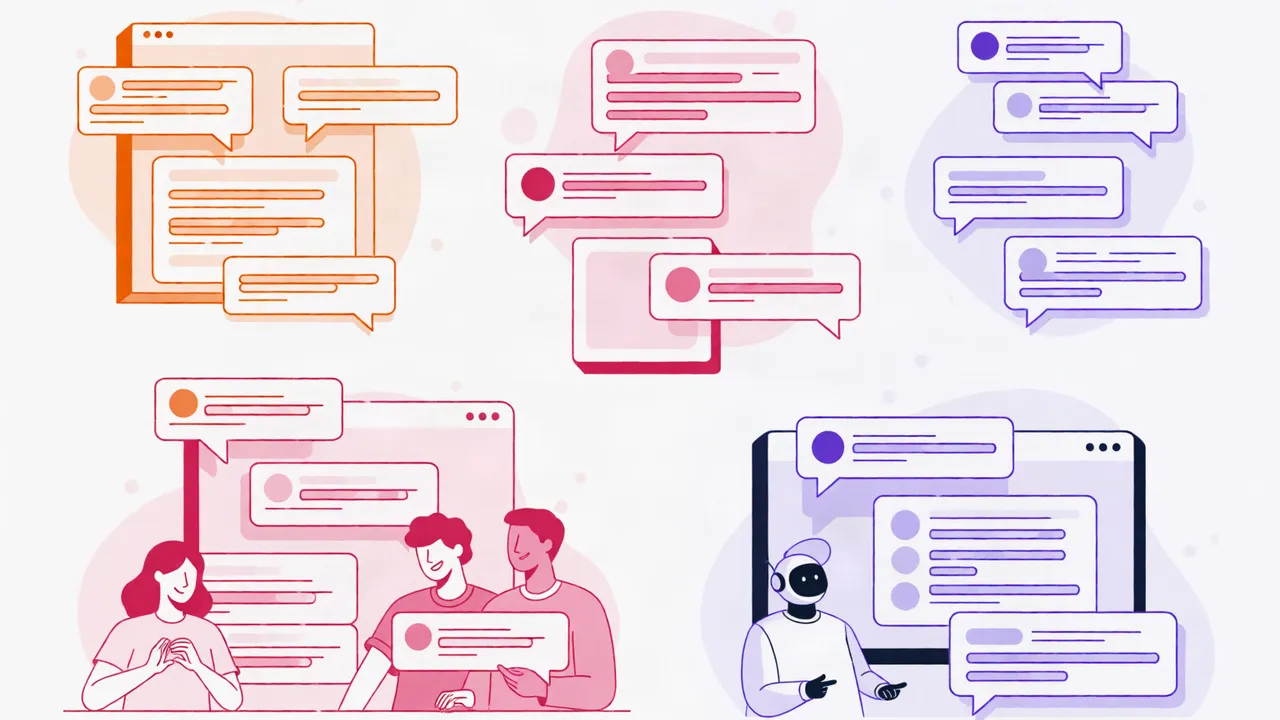
AI social media crisis management works as three separate systems, not one: monitoring that flags anomalies within minutes, a prediction layer that scores which anomalies are actually dangerous, and a drafting layer that produces human-approved responses in your brand voice. The AI should never publish on its own. The founders who handle crises well in 2026 aren't the ones with the most tools — they're the ones who rehearsed the workflow before they needed it.
Key takeaways
- Split the job into three layers — detect, predict, draft — and solve each one separately.
- Your own rolling baseline beats any vendor's generic "risk score."
- A severity table agreed in advance is worth more than another dashboard.
- AI drafts; a human approves and publishes. No exceptions, including at 2am.
- Being transparent about where AI sits in your response is now a trust question, not a legal footnote.
Why Do Social Media Crises Demand AI in 2026?
Social media crises now demand AI because the escalation window has collapsed to minutes while the volume of signals has exploded past what any founder can read manually. AI's real job isn't writing your apology — it's making sure you see the problem while it's still small enough to answer with one honest reply.
The PRSA's PR Journal was already covering AI and the new era of crisis comms back in May 2025, and the framing has only hardened since. Meanwhile the IAEA has published on AI, misinformation and emergency communication — a reminder that in a crisis, bad information travels faster than your correction.
The honest caveat: if you're pre-revenue with 400 followers, you do not need a crisis platform. You need a saved search and the discipline to check it. Buy tooling when a single bad thread could plausibly cost you a customer or a hire.
Real-Time Social Media Monitoring AI: Spotting Signals Before They Escalate
Real-time monitoring AI watches mentions, replies, and thread velocity across X, Reddit, and news, then alerts you when volume or tone breaks from your normal pattern. The useful version measures rate of change, not absolute volume — three angry replies in twenty minutes matters more than thirty spread over a month.
What actually works, in my experience:
- Baseline first. Let the tool observe 30 days of normal traffic before you trust a single alert. Otherwise everything looks like a spike.
- Alert on velocity, not sentiment. Sentiment scores are noisy; a sudden jump in mention rate is not.
- Include the places you don't own. Reddit threads and niche forums are where a complaint festers before it reaches X. If you're building presence there deliberately, the same habits that make AI-powered Reddit community building work will also surface problems early — because you're already in the room.
Sprinklr's complete guide to social media crisis management is a solid reference for how enterprise listening is structured, though most of it assumes a team you don't have yet.
Predictive AI for Social Media Crises: Can You Anticipate a Blowup?
Predictive AI can flag conditions that precede crises — rising complaint clustering, a support-ticket theme crossing into public channels, an influencer picking up your weakest talking point. It cannot tell you whether something will go viral. Treat predictions as a prioritization tool, not a prophecy.
The pattern I've found reliable: crises rarely start with a stranger. They start with a customer whose issue went unanswered for too long, or a topic where your public position and your product behaviour disagree. Both are detectable weeks ahead. Trend-spotting models are genuinely useful here — the same signal-reading that helps you predict which topics will spread will tell you which of your own weak spots is most exposed.
What predictive AI is bad at: novelty. A genuinely new accusation has no historical analogue, so the model scores it low. Keep a human reading the raw feed weekly. That's the "immunity" layer — fixing the underlying issue before anyone amplifies it.
What Does an AI Crisis Communication Strategy Look Like?
An AI crisis communication strategy is a written document that assigns each stage of a crisis to a specific tool and a specific human, with pre-agreed thresholds. If it isn't written down and rehearsed, it's a wish, not a strategy.
A workable one-page version:
- Detection: which tool, which keywords, who gets the alert.
- Triage: the severity table (below), and who has authority to call each tier.
- Drafting: which model, trained on what brand-voice material, reviewed by whom.
- Approval: one named approver, plus a backup.
- Publication: manual, always.
- Review: a 48-hour post-mortem with the transcript saved.
Notice how little of that is AI. The AI does steps 1 and 3 well. Everything else is judgement, and judgement is the part you can't outsource.
AI for Rapid Response Social Media: Drafting, Tailoring, and Localizing
AI is genuinely excellent at rapid response drafting: producing a first version in seconds, adapting one statement for X, Reddit, email, and a support macro, and translating it without the stiffness of older machine translation. What it is not good at is knowing what you should not say.
The first time I tried this, the draft was factually accurate and completely wrong in tone — it read like a legal notice when the thread needed a human admitting a mistake. The fix was boring: feed the model your actual past replies and your brand-voice guidelines, not a generic "be empathetic" prompt. That's the same discipline behind keeping AI output consistent with your brand voice, and it matters more under pressure, not less.
Practical rules:
- Draft in one voice, adapt per channel. Don't let the model invent a different personality for each platform.
- Never localize without a native check on anything legally or culturally sensitive.
- Keep a "do not say" list in the prompt: no speculation on cause, no blame, no timelines you can't hold.
5WPR's breakdown of how AI is transforming crisis response and monitoring covers the agency-side version of this workflow.
AI Sentiment Analysis in a Crisis: Useful, But Not an Oracle
AI sentiment analysis in a crisis is useful for tracking direction and volume, and unreliable for judging intensity or intent. Sarcasm, in-group humour, and quote-tweet pile-ons all read as negative when they aren't — and genuine fury sometimes reads as neutral.
Use it as a trend line, not a verdict. If sentiment is sliding for six hours straight, that's real. If it dips for twenty minutes, that's noise. The one signal I trust most is a change in who is talking: the moment accounts outside your normal audience join, sentiment scoring becomes irrelevant and you should be reading the actual replies yourself.
AI Ethics in Crisis Communication: Transparency and Trust
AI ethics in crisis communication comes down to three commitments: disclose when AI drafted something material, keep a human accountable for every published word, and never use AI to simulate customers, amplify your own defence, or bury criticism. Audiences forgive mistakes. They don't forgive manipulation.
The IAEA's work on AI, misinformation and emergency communication is worth reading precisely because it treats AI as both a source of bad information and a tool for correcting it. In a crisis, you're on both sides of that line.
A simple disclosure standard that works: you don't need to announce that AI helped draft a routine reply, but you do need to say so if AI generated a formal statement, a correction, or anything that reads as a company position. And if you're using AI agents to engage publicly at all, the same transparency logic applies to how those agents behave in normal times — a crisis is a bad moment to introduce a new personality.
Social Media Crisis Preparedness with AI: The Playbook
Social media crisis preparedness with AI means deciding your severity tiers, thresholds, and approvers before anything happens, then letting AI handle detection and drafting inside those rails. The tier table is the whole playbook. Everything else is tooling.
| Tier | Signal | Who decides | Target first response |
|---|---|---|---|
| 0 — Noise | One snarky reply, no velocity | Nobody; logged only | None |
| 1 — Friction | Same complaint from 3+ accounts within an hour | Founder + one teammate | Public reply within 2 hours |
| 2 — Flare | Complaint crosses into a second platform, or a mid-size account amplifies | Founder | Holding statement within 60 minutes |
| 3 — Fire | Press, a large account, or a support-queue spike | Founder + legal/comms | Statement within 30 minutes, updates hourly |
Fill this in during a calm week, name real people, and rehearse Tier 2 once. That single rehearsal is worth more than any dashboard.
AI Tools for Reputation Management: What Should a Startup Buy?
For most startups, the right stack is one mid-tier listening tool, one brand-voice drafting agent, and a shared document. Enterprise suites are built for teams of fifteen; buying one at seed stage mostly buys you unused seats.
| Layer | What it does | Reasonable startup option | Where founders overspend |
|---|---|---|---|
| Listening | Keyword + velocity alerts across X, Reddit, news | Native alerts plus one mid-tier listener | Enterprise suites with seat minimums |
| Prediction | Scores anomalies against your own baseline | A 30-day baseline you compute yourself | "Risk scores" not trained on your data |
| Drafting | On-brand, channel-specific replies | Brand-voice agent with human approval | Full autopublish |
| Archive | Searchable record of every statement | A shared doc with timestamps | Nothing — this is free |
Credit where it's due: GummySearch is genuinely strong for Reddit research, Redreach is good at surfacing threads worth replying to, and ReplyAgent handles reply drafting competently. None of them are crisis platforms, and that's fine — use them for the listening layer and keep the response workflow human.
How Do You Measure AI's Impact on Crisis Resolution?
Measure three things: time from first signal to first human acknowledgement, time from acknowledgement to published response, and whether the conversation returned to baseline within 72 hours. Vanity metrics like "sentiment recovered 40%" are noise unless tied to one of those three.
Track them per incident in a single log. After four or five entries you'll see which layer is actually failing — usually it's approval latency, not detection.
The Future of Founder-Led Crisis Management with AI
The direction of travel is toward AI handling detection and first-draft response continuously, with founders stepping in for judgement calls. That's already how the best-run small companies operate, and it's a healthier model than the agency retainer it replaces.
The risk is drift: teams that automate engagement stop reading their own mentions, and then the first time they notice a problem is when a customer emails angrily. Whatever you automate, keep one human reading the raw feed weekly. If you want a system that drafts in your voice and still routes everything through your approval, that's roughly what we built FounderReply to do.
FAQ
What is AI social media crisis management?
It's the use of AI to detect unusual mention patterns, score which ones are dangerous, and draft human-approved responses in your brand voice. It is not autonomous publishing, and any tool that offers that should be treated as a liability.
Can AI predict a social media crisis before it happens?
Partly. AI can flag the conditions that precede most crises — clustered complaints, unresolved support themes going public, exposed weak points — but it can't predict novelty or virality. Use it to prioritize, not to forecast.
Is it ethical to use AI to write crisis responses?
Yes, with disclosure. The line is manipulation: don't use AI to simulate customers, amplify your own defence, or bury criticism. If AI generated a formal statement or correction, say so.
Do startups need paid AI tools for crisis monitoring?
Not until a single bad thread could plausibly cost you a customer or a hire. Before that, saved searches, a 30-day baseline, and a written severity table cover most of the risk.
How fast should a startup respond to a social media crisis?
Tier 1 friction within two hours, Tier 2 within sixty minutes, Tier 3 within thirty. The exact numbers matter less than deciding them in advance and naming who has authority to act.